Garden Walls · Concept

Dressed Limestone Garden Wall: Kilkenny Blue, Lime Pointed

Formal coursed garden wall in dressed Kilkenny Blue Limestone with recessed lime pointing and a saddled coping. €180–€300 per linear metre at 1 m high.

Indicative budget: €180–€300 (EUR per linear metre at 1 m high built in Ireland, 2026, plus €30 to €70 per metre for stone) · 16 August 2026 · By found.rocks
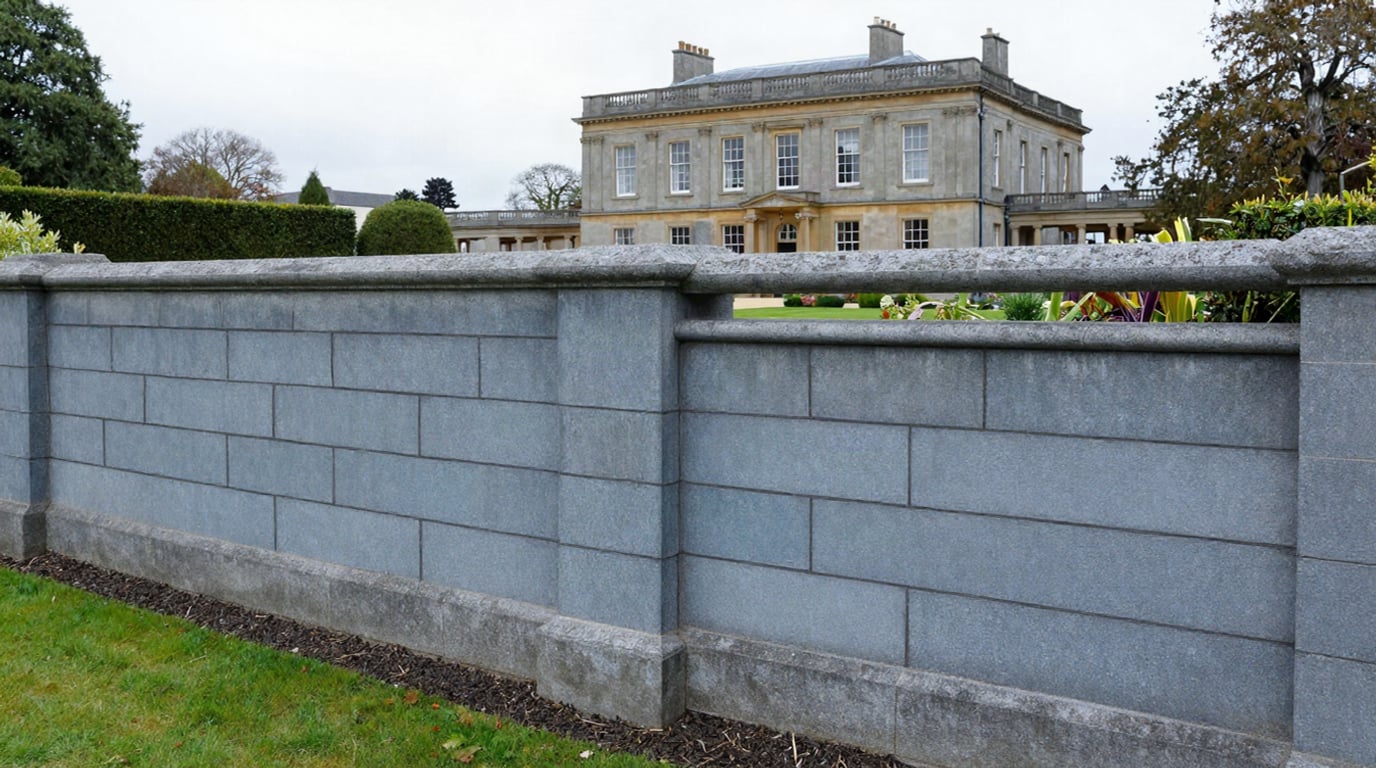
Formal blue-grey dressed limestone garden wall with narrow dark recessed joints, broad coping, lawn and clipped hedging in front of a Georgian country house. Concept visualisation
Recessed lime joints leave narrow shadow lines between the dressed blocks, so the formal boundary reads as limestone rather than pale mortar stripes.

A dressed limestone garden wall costs €180 to €300 per linear metre at 1 m high in Ireland (2026), plus €30 to €70 per metre for the stone. That is the dearest wall on the table, and the reason is visible in every joint: each block is cut to size before it is laid, so the courses run level and the joints stay even. Built from dressed Kilkenny Blue Limestone with lime mortar pointing recessed from the face and a saddled coping shedding water to both sides. It belongs against period and formal architecture. Beside a cottage or a field boundary it looks imported, and a dry stone wall is the right answer instead.

The look

Level courses and quiet joints. The whole effect rests on consistency: course heights that hold, vertical joints broken between courses, and pointing that sits back from the face so the wall reads as stone with shadow lines rather than stone with grey stripes through it.

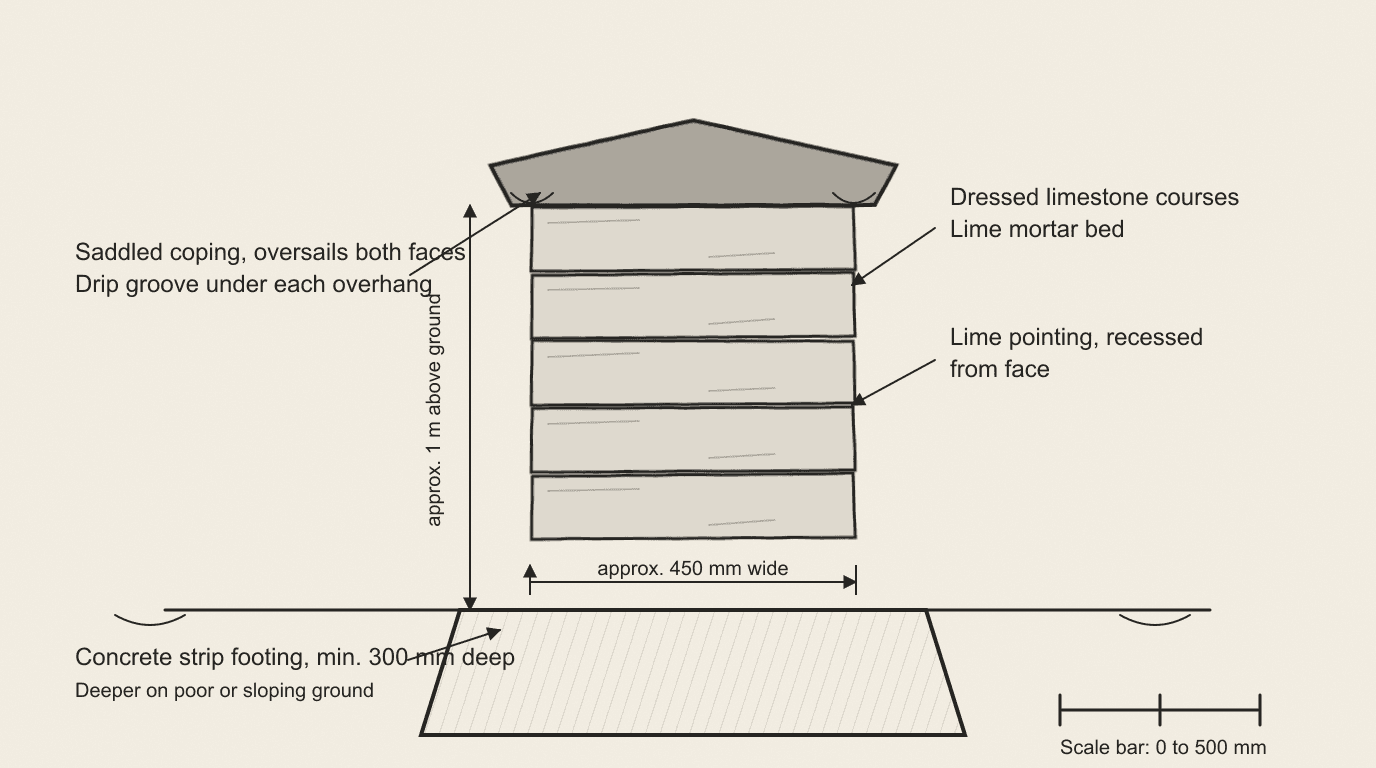
The coping does the work at the top. Saddled, oversailing slightly on both faces, with a drip so rainwater leaves the wall instead of running down it. A flush coping stains the face within a couple of winters.

Why Kilkenny Blue

It is the stone Irish formal work has used for centuries, and it takes a cut cleanly, which is what dressing demands. Fresh it reads blue-grey; wet it deepens almost to charcoal; over years it takes a soft patina that is most of the reason people want it.

It is a limestone at Mohs 3 to 4, so it is not the hardest stone here. That matters far less in a wall than underfoot, and it pairs exactly with the Heritage patio concept if the two run together in one garden.

What it costs

Work Per linear metre
Dressed stone, 1 m high €180–€300
Coursed rubble, 1 m high €120–€200
Random rubble, 1 m high €90–€160
Stone supply €30–€70 additional

Worth reading that table honestly before committing. If the wall is long and the budget is fixed, coursed rubble in the same stone gives most of the character for a third less, and the difference is legible only at close range.

Feature work Typical cost
Pair of entrance pillars, 1.2 m high €800–€1,800
Low feature wall, 600 mm high, 5 m €600–€1,200

What to ask the stonemason

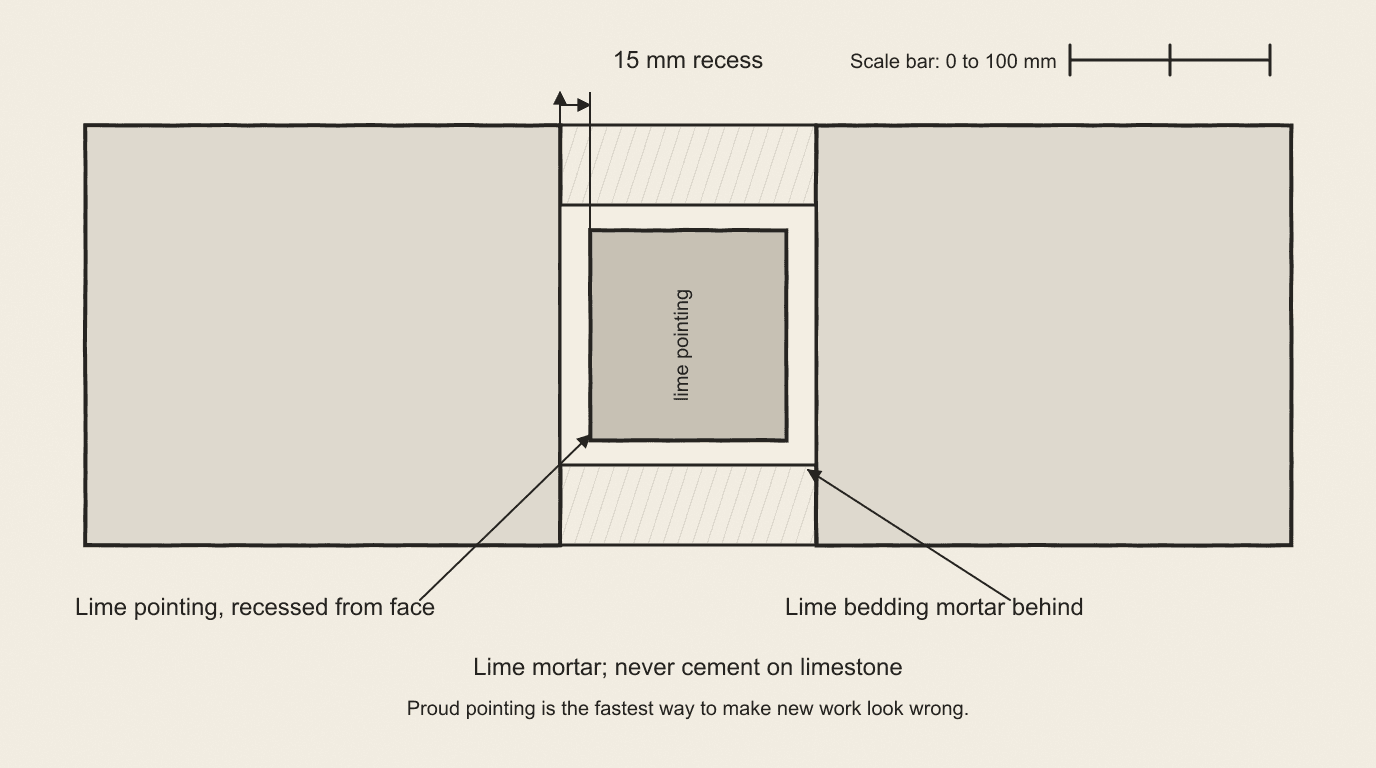
What mortar mix? Lime-based, not ordinary cement. On limestone this is a specification question, not a preference.

What foundation? A concrete strip footing at least 300 mm deep, and deeper on sloping ground or poor soil. Some quotes leave foundation work out entirely, so ask what is included.

How is the pointing finished? Recessed from the face, consistently. Pointing proud of the stone is the single fastest way to make new work look wrong.

Is the coping saddled with a drip? Flush copings stain the wall.

Where to source

Kilkenny Blue Limestone comes from the south east and is supplied nationwide. Dressed work needs a mason who cuts, not only one who lays.

Find stonemasons in the directory, compare the stone in the Stone Library, or read the full garden wall cost guide.
Alternate views

The same concept from different angles.

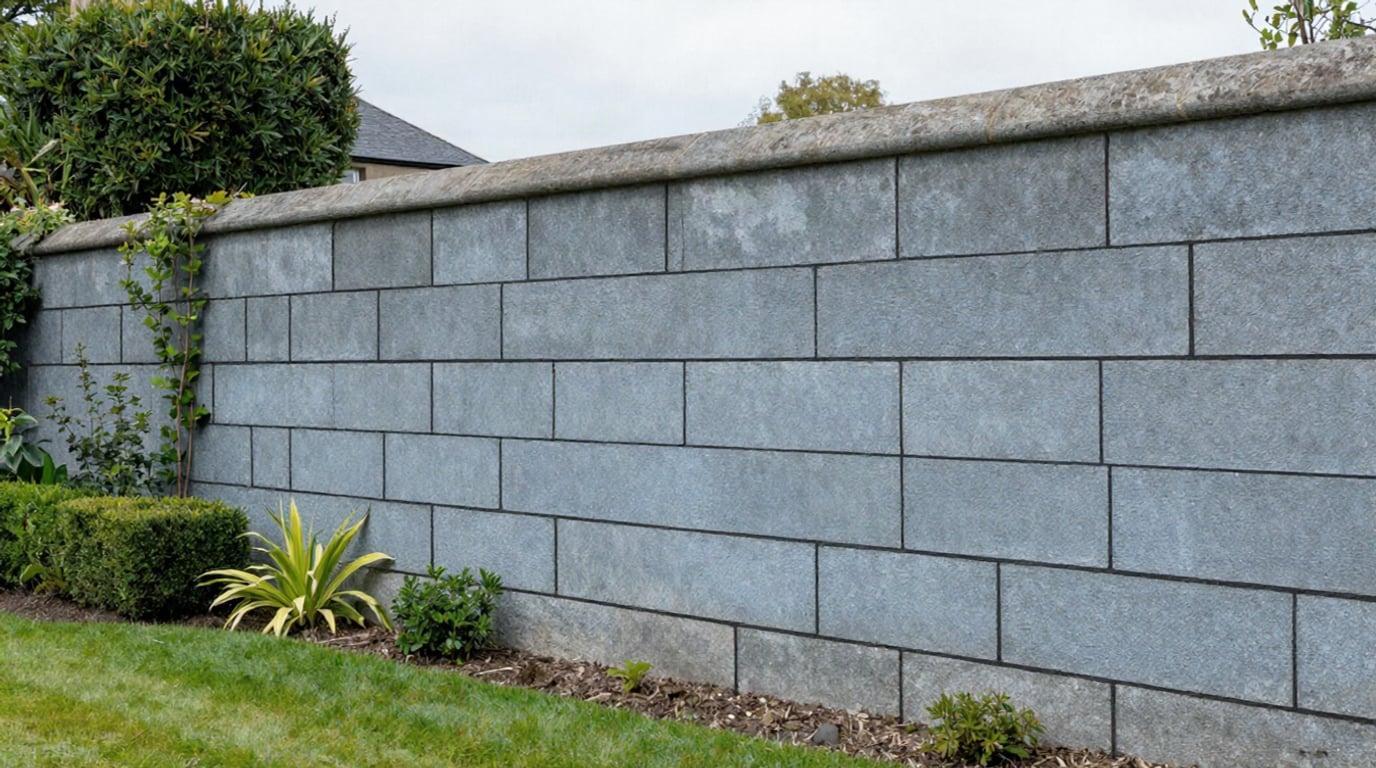
Three-quarter garden view of dressed blue-grey limestone blocks with staggered joints recessed into dark grooves, broad coping, clipped box hedging, planting and lawn. Concept visualisation
The closer garden view makes the craft legible: staggered blockwork, sawn limestone faces and lime pointing set back into shadow.

How it works

Plan and section drawings showing the layout decisions behind the concept.

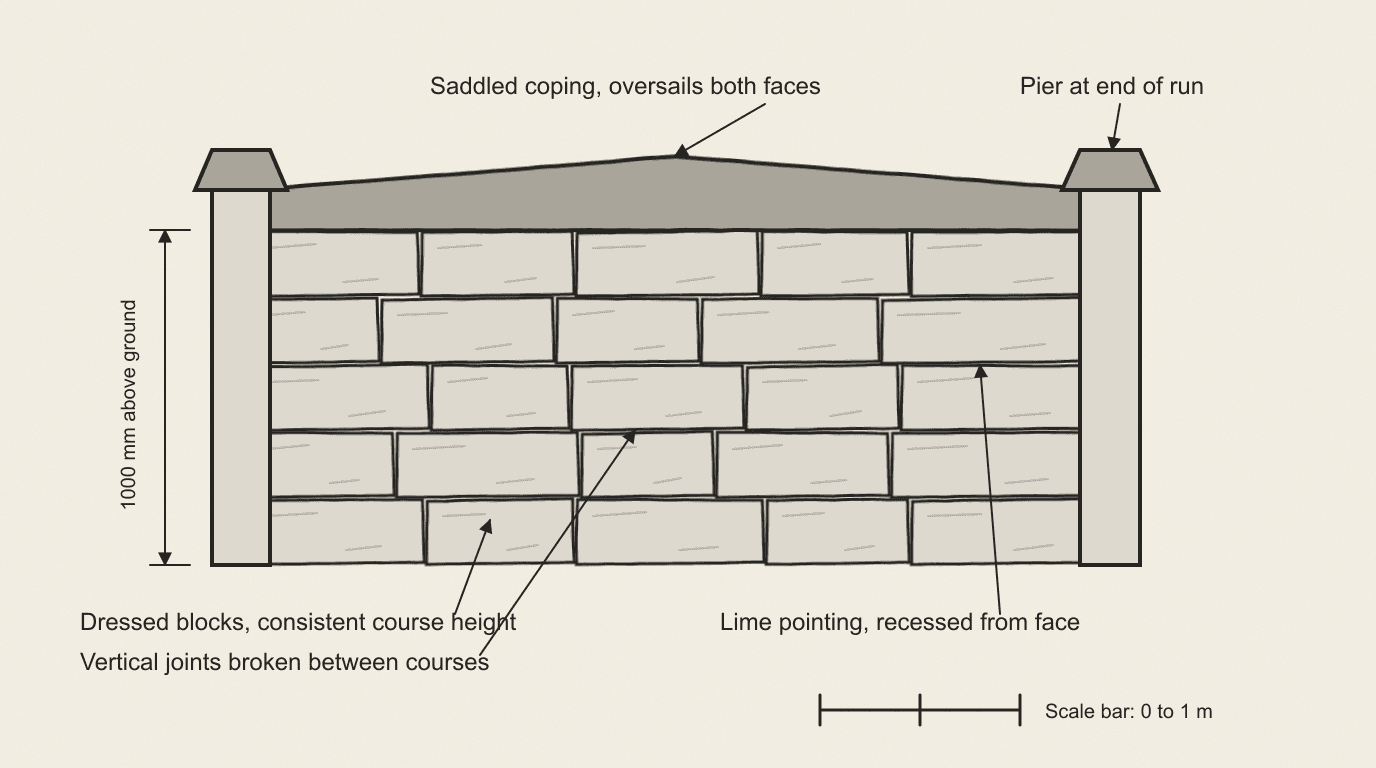
Architectural elevation of a one-metre dressed limestone wall between end piers, with five level courses, staggered vertical joints, saddled coping, dimensions and material annotations. Concept visualisation
Elevation: consistent course heights and broken vertical joints keep the wall formal without letting any joint run through two courses.
Architectural cross-section through a 450-millimetre-wide dressed limestone wall, showing five lime-bedded courses above a concrete strip footing and saddled coping with drip grooves. Concept visualisation
Section: a concrete strip footing supports the lime-bedded courses; the oversailing saddle coping throws rain clear of both faces.
Architectural detail of two dressed limestone block faces with lime pointing set 15 millimetres back, lime bedding mortar behind, scale bar and specification notes. Concept visualisation
Joint detail: set lime pointing back from the stone face; proud pointing makes precise new work look clumsy.

The stone

Real material reference: open the Stone Library entry for full geology, suppliers, and finish options.

Ready to brief a stonemason?

Share this concept page as a starting point: the budget, stone, and detailing notes make for a clearer first conversation.

Frequently asked

What does a dressed stone garden wall cost in Ireland?
€180 to €300 per linear metre at 1 m high, plus €30 to €70 per metre for the stone (Ireland, 2026). That is the top of the garden wall range and the gap is real: random rubble at the same height is €90 to €160 per metre and coursed rubble is €120 to €200. You are paying for every block being shaped to size before it is laid.
What is the difference between dressed, coursed and random rubble?
Random rubble uses stone broadly as it comes, fitted together in no particular pattern. Coursed rubble is the same stone brought roughly to level lines. Dressed stone is cut to consistent dimensions before it reaches the wall, so the courses run true and the joints are even. The cost order follows the amount of shaping: €90 to €160, €120 to €200, then €180 to €300 per metre at 1 m high.
Why lime mortar rather than cement on a limestone wall?
Two reasons, and they are the same ones that apply to a limestone patio. Lime lets the wall breathe and move slightly with temperature and frost instead of cracking, and it does not leach white salts onto the face of the stone the way cement pointing routinely does on limestone. Cement can look right for a few years and then tell on itself.
Do I need planning permission for a garden wall?
Not usually for a boundary wall at this height, but a retaining wall is a different question: anything over 1.5 m in Ireland may need planning permission and an engineer's sign-off. Check with the local authority before building rather than after. This concept is a boundary wall and holds back nothing.
What does a pair of entrance pillars cost?
€800 to €1,800 for a pair at 1.2 m high in Ireland (2026). Pillars are the natural companion to a dressed wall because both want the same precision, and they are usually priced separately from the run of wall. A low feature wall at 600 mm over 5 metres runs €600 to €1,200.

Other concepts in this project

About the visuals on this page. Images tagged Concept visualisation are AI-generated illustrations used to communicate design intent: joint patterns, layout, scale, edge details. They are not photographs of real installations. Where real stones are shown (in the material palette and any reference installations) those photos are real.